Home Saunas Explained: Types, Space and Power
A home sauna can be an indoor cabin, outdoor room or portable blanket. Choose by the heat style you want, the space you can give it and the electrical supply your setup needs.
On this page (6 sections)
A home sauna can be an indoor cabin, an outdoor room or a portable blanket. Choose by the heat style you want, the space you can give it and the electrical supply your setup needs.
Infrared cabins use heating panels, while traditional saunas heat the room with a heater and stones. A blanket offers personal heat without reserving a permanent footprint.
Start with your available location and household use, then compare installation needs. Our home sauna guide covers the basics, and the best home sauna options for a spare room or basement can help narrow indoor choices.
What types of home saunas are available?
Home saunas generally fall into indoor cabins, outdoor saunas and portable blankets. Their heat style, installation and space needs differ.
| Type | Heat style | Typical placement | Main planning point |
|---|---|---|---|
| Infrared cabin | Infrared panels warm the body | Indoor room or suitable covered area | Check footprint, plug and room conditions |
| Traditional cabin | Heater warms the room and stones | Indoor room or outdoor site | Check heater power, clearances and ventilation |
| Outdoor sauna | Traditional heat in a separate structure | Backyard or other suitable outdoor area | Plan the base, access and electrical supply |
| Sauna blanket | Infrared heat around the body | Indoor use with storage between sessions | Check use instructions and storage needs |
The table describes broad categories. Specific models can differ, so confirm dimensions, power and installation details before you decide.
Is an infrared cabin a good home sauna?
An infrared cabin suits you if you want panel-based heat in a permanent indoor enclosure. Its heater setup and temperature range differ from those of a traditional sauna.
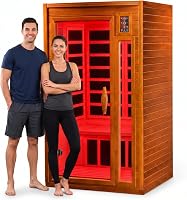
The Dynamic Saunas Barcelona is a 1- to 2-person infrared cabin with 6 carbon PureTech panels, an indoor design and a standard 120V, 15-amp plug. It measures 36 x 32 x 67 in and can assemble on an indoor surface, including carpet.
Its listed operating range is up to 135°F, with a recommended comfort range of 115°F to 130°F. The built-in speakers, Bluetooth and optional white reading light are extras to weigh against your budget and room needs.
Infrared cabins may appeal if you prefer lower air temperatures than a traditional sauna. Read infrared vs regular sauna to compare the heat styles before choosing.
What does a traditional home sauna need?
A traditional cabin needs space for the enclosure, a suitable heater circuit and attention to heat and moisture. Some traditional models let you pour water on hot stones for steam.
The OUTEXER indoor cabin is sized for 2 to 3 people and measures 41.34 x 47.24 x 74.8 in. It has a 3KW heater rated for 220V to 240V, so plan for the specified electrical supply before installation.
The cabin includes volcanic stones, a wooden bucket and spoon, and a thermometer and hygrometer. Those accessories support a traditional setup, but the available room, wiring and installation instructions still determine whether it fits your home.
For the heater side of the decision, see how to buy a sauna heater. If you're choosing an indoor enclosure, compare options in our indoor sauna cabins guide.
When does an outdoor home sauna make sense?
An outdoor sauna makes sense if you have a suitable site and want to keep the hot room separate from your living space. You still need to plan the base, access and power.
The OUTEXER outdoor traditional sauna is described for 4 to 5 people, with dimensions of 59.06 x 70.87 x 70.87 in. It has a 4.5KW heater and a carbonized spruce exterior.
Measure the path from your house, the intended base and clearance around the structure. Check the maker's installation instructions and have a qualified electrician confirm the outdoor electrical setup is suitable.
A backyard unit can keep sauna heat and moisture out of the main house, but it needs outdoor space and setup work. Explore backyard saunas and compare outdoor sauna kits if this is your direction.
Can a sauna blanket replace a cabin?
A sauna blanket can suit you if you want personal heat that folds away, rather than a room to sit in with someone else. It takes less permanent space but offers a different experience from a cabin.
The Lifepro RejuvaWrap is a foldable infrared blanket with 9 temperature levels from 95°F to 176°F and a timer adjustable from 5 to 60 minutes. It measures 71 x 36 in for coverage and weighs 14.7 lb.
The blanket needs a clear place to use it and storage space between sessions. Follow its user manual for setup, temperature selection and care.
Compare the trade-offs in sauna blanket vs full sauna. If storage and portability are your main concerns, our sauna blankets guide covers more options.
How much space does a home sauna need?
A home sauna needs the cabin's measured footprint plus space for installation, access and safe use. A blanket needs a use area and storage space, while an outdoor model also needs a suitable site and base.
Start with the product's outside dimensions. Then check:
- The narrowest doorway, hall or turn on the route to the installation spot.
- The maker's required clearance around the unit.
- Room to open the door and get in and out.
- The floor surface and its ability to support the filled, assembled unit.
- Nearby furniture, outlets, fixtures and water sources.
- Space to assemble the cabin, if it arrives in panels.
Use painter's tape to mark the footprint on the floor. Stand at the door and check whether you can enter, leave and reach controls without moving other furniture.
A larger cabin can fit more people, but it also requires more floor space and may need more power. For more on dimensions and seating, read how big a sauna should be.
What power supply does a home sauna need?
A home sauna's power needs depend on its heater type and model. Some compact infrared cabins use a standard household outlet; traditional heaters can need a dedicated higher-voltage circuit.
For example, the Dynamic Barcelona is specified for a standard 15-amp, 120V plug. The two OUTEXER traditional saunas in this guide call for 220V to 240V power, with 3KW and 4.5KW heaters respectively.
Do not assume an outlet is suitable because it is nearby. Check the product instructions and have an electrician confirm the circuit, wiring and any local requirements before you buy or install a sauna.
Heater size and room volume are connected, so a heater should match the sauna space. Our sauna heater sizing guide explains the factors to check, and how much electricity a sauna uses covers energy questions.
Which home sauna should you choose?
Choose the home sauna that fits your space, heat preference and electrical setup at the same time. A good match starts with practical limits, then narrows to the session style you want.
- Choose an infrared cabin if you want a permanent indoor unit with panel heat.
- Choose a traditional cabin if you want a heater-and-stones setup and can support its power needs.
- Choose an outdoor sauna if you have a suitable yard and want a separate hot room.
- Choose a blanket if portability and storage matter more than a shared cabin.
For a small indoor area, compare the best home saunas for a spare room or basement. For an outdoor space, use the backyard sauna guide to plan the site and structure.
What should you check before buying a home sauna?
Before buying a home sauna, verify the measurements, power requirements and installation conditions for the exact model. These checks help catch a poor fit before delivery.
- Measure the intended location and the route into it.
- Compare the required circuit with the power available in that location.
- Read the full installation and clearance instructions.
- Confirm whether the unit is intended for indoor or outdoor use.
- Check what accessories are included and which are separate.
- Plan how you'll clean and maintain the sauna after use.
A seller's stated assembly time or heat-up time is not a substitute for checking your own room and electrical setup. Follow the manufacturer's instructions, and ask a qualified professional about wiring or installation questions.
For a closer look at fit, materials and setup, use what to look for in a home sauna. If you are still weighing cabin styles, barrel sauna vs square cabin compares two common outdoor shapes.
Home sauna: which option fits your home?
The right home sauna is the one you can install and use comfortably within your available space and power supply. Choose an infrared cabin for indoor panel heat, a traditional or outdoor cabin for a heater-and-stones setup, or a blanket when easy storage matters most.
If you have a dedicated indoor room, start with the indoor sauna cabins guide. If you have a suitable yard, compare outdoor sauna kits before choosing a structure.
Frequently asked questions
What type of home sauna is easiest to fit indoors?
A compact infrared cabin or sauna blanket is often easier to fit indoors than a traditional room. A cabin needs a clear floor area, safe electrical access and room to assemble it, while a blanket folds away after use.
Measure the route into the room and check the unit's electrical requirements before buying.
Does a home sauna need 240V power?
Not every home sauna needs 240V power. Some compact infrared cabins use a standard 120V plug, while traditional heaters may call for 220V to 240V wiring.
Check the exact unit's power needs and have an electrician confirm the circuit can support it before installation.
Can you put a home sauna in a bedroom or basement?
A home sauna may fit in a bedroom or basement if the floor, clearances, ventilation and power supply suit the specific unit. Traditional cabins also add heat and moisture, so follow the manufacturer's installation instructions and local electrical rules.
Measure the room and access route before choosing a model.
What is the difference between infrared and traditional home saunas?
Infrared cabins use panels to warm the body directly, usually at lower air temperatures than traditional saunas. Traditional saunas use a heater and stones to warm the room, and some let you pour water over the stones for steam.
Choose based on the heat style, power needs and room conditions you prefer.
Is a sauna blanket the same as a home sauna?
A sauna blanket provides a personal heat session while you lie inside it, but it does not create a walk-in room or seat several people. It folds away for storage and uses less permanent space than a cabin.
Consider one if portability matters more than an open room and shared use.