Infrared Sauna vs Regular Sauna: Which Suits Your Home? (November 2026)
Choose infrared for lower-temperature heat and simpler indoor setup, or a regular sauna for hotter air and water-on-stones steam. Your room, power supply and preferred heat style decide which suits your home.
On this page (6 sections)
Choose an infrared sauna for lower-temperature radiant heat and a regular sauna for hotter air and water-on-stones steam. In an infrared sauna vs regular sauna comparison, your power supply, available room and preferred session style are the main decision points.
Infrared cabins use heating panels, while a regular sauna uses a stove and stones to heat the cabin air. Some traditional setups also let you add water to the stones for steam.
For a broader view of cabin types, room needs and power, start with our home sauna guide. If you're ready to compare cabin choices, see our best home saunas for a spare room or basement.
 Best for lower-temperature sessions
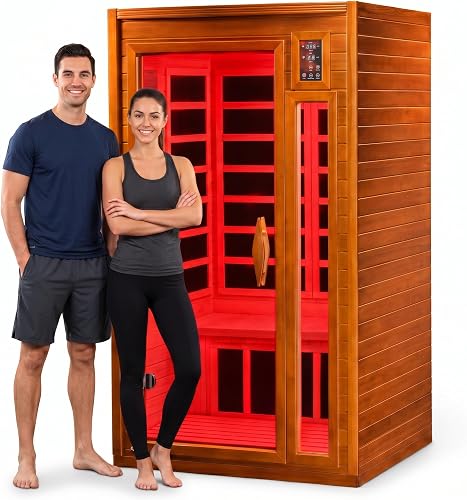
Dynamic Saunas Barcelona 1-2 Person Infrared Sauna
 Best for hotter steam sessions
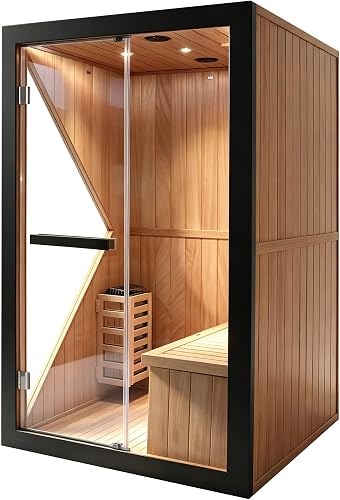
2 Person Traditional Steam Sauna with 3KW Heater
Infrared sauna vs regular sauna: what is the difference?
Infrared panels provide radiant heat, while a regular sauna stove heats air and stones. That difference changes the temperature range, steam option and electrical setup to check before you buy.
The Dynamic Barcelona uses 6 carbon infrared panels and operates up to 135°F, with a recommended comfort range of 115°F to 130°F. The HOSAUNA traditional cabin has a 3000 W stove, volcanic stones and a stated maximum temperature of 195°F.
Those figures describe these models, not every infrared or traditional sauna. A different cabin may use another heater, reach another temperature or require a different circuit.
How does infrared heat feel different?
An infrared cabin is a fit for people who want radiant heat without heating the room to the same high temperatures used by many traditional saunas. The Dynamic cabin's stated comfort range is lower than the traditional model's maximum.
Infrared models also differ in panel layout and cabin size. The Barcelona is designed for one or two adults, while the Albott is a solo cabin with 4 carbon panels and a foot-heating zone.
Pick by the way you want to use the cabin, rather than assuming all infrared models are alike. Our guide to the best infrared saunas for everyday home use covers more options in that category.
What does a regular sauna add?
A traditional sauna provides heated air and the option of steam when its stove and stones are designed for water use. The HOSAUNA cabin includes volcanic stones, a wooden bucket and scoop for that style of session.
Steam is optional, not a requirement for every traditional session. Follow the sauna and heater instructions for how much water to use and where it can be poured.
The traditional cabin also runs on AC 220-240 V. Confirm that your planned location and electrical supply can support the exact heater before arranging delivery or assembly.
Which sauna fits your room?
The smaller solo infrared cabin takes less floor area, while the two-person traditional cabin needs a wider square footprint. Measure the cabin area and the route into the room before choosing either type.
The Albott measures 31.8 x 27.2 x 60.2 inches, and its listed footprint is about 6 square feet. The Barcelona's stated interior dimensions are 36 x 32 x 67 inches; use the exterior dimensions and installation clearances when planning a location.
The HOSAUNA traditional cabin measures 47.2 x 47.2 x 74.8 inches. Its square footprint uses more floor area than either infrared example, and the taller height may affect placement under a low ceiling.
These are cabinet measurements, not complete room requirements. Leave space for the door, safe entry, assembly and any clearances required by each manual.
Can a sauna fit in a spare room or basement?
A spare room or basement can work if the floor, ceiling, access route and electrical supply meet the sauna's requirements. Check the route through doors and turns as carefully as the final footprint.
The Dynamic Barcelona can be assembled on an indoor surface, including carpet, and uses a standard 15-amp, 120-volt plug. Its warranty is for indoor use only.
The Albott has a modular design and is described as a one-person setup with basic tools. It uses 110 V, but the exact outlet and instructions still matter.
A traditional model can ask more of the room's electrical setup. The HOSAUNA cabin specifies AC 220-240 V, so have a qualified electrician check the circuit if you're unsure.
Our guide on what to look for in a home sauna helps you plan size, materials, power and setup before buying.
Which sauna is easier to set up?
The infrared examples use lower-voltage household connections, while the traditional cabin needs a 220-240 V supply. Setup time and electrical needs depend on the exact model, so confirm both before delivery.
The Barcelona is designed to assemble in about one hour and uses a standard 15-amp, 120-volt plug without special wiring. The Albott is a modular cabin described for one-person setup in 20 minutes using basic tools.
The HOSAUNA cabin uses modular snap-lock panels and is designed for two adults to assemble without professional tools. Its 3000 W heater operates on AC 220-240 V, which may require electrical work if your planned location isn't already equipped.
Treat the stated setup methods as model-specific. Check the instructions for the floor, ventilation, clearances and electrical connection before deciding where the cabin will go.
Which sauna is easier to maintain?
Both types need routine care, but a traditional sauna has stones and water use to account for. Keep the cabin dry as directed, clean the surfaces with approved methods and follow the heater manual.
In a traditional sauna, water contact is part of making steam, so use only the heater's approved stones and follow its instructions. The HOSAUNA cabin includes a wooden bucket and scoop, but that doesn't replace the heater's safety directions.
Infrared cabins do not use water-on-stones steam in the same way. Wipe down the seating and interior after use according to the manual, and avoid wetting electrical panels.
Wood choice alone doesn't tell you how much upkeep a sauna needs. Check the care instructions for the specific cabin and heater, especially for cleaning glass, wood and electrical parts.
Which is better for a first home sauna?
An infrared cabin is a practical starting point if you want a smaller indoor unit and a standard household plug; a traditional cabin is a fit if steam and hotter air are priorities. The right choice depends on your room and power setup as much as heat preference.
For solo use, the Albott keeps the footprint small and includes foot heating. For one or two users who want infrared, the Dynamic Barcelona adds room for a second adult and a 120-volt plug.
For two-person traditional sessions, the HOSAUNA provides a bench, stove and volcanic stones. Its larger footprint and 220-240 V requirement call for more planning.
If you're still weighing indoor cabins, browse our indoor sauna cabin guide. For a side-by-side look at dry heat and moisture, read dry sauna vs steam room.
How should you choose between infrared and regular heat?
Pick infrared if you prefer radiant heat at a lower cabin temperature, and pick a regular sauna if you want a stove, stones and the option of steam. Then rule out models that don't fit your room or electrical supply.
Choose the Dynamic Barcelona if you want an indoor infrared cabin for one or two adults with a standard 120-volt plug. Choose the Albott if solo use and a compact footprint matter most.
Choose the HOSAUNA traditional cabin if a two-person bench and water-on-stones steam match your routine, and your location can support its 220-240 V connection. Measure the delivery route and confirm installation requirements before ordering.
The best home sauna is the one you can place safely and use in the heat style you enjoy. For a wider cabin comparison, use our home sauna guide.
Products in this comparison
Frequently asked questions
Is an infrared sauna better than a regular sauna?
An infrared sauna suits people who prefer lower-temperature radiant heat, while a regular sauna suits those who want hotter air and the option to create steam over stones. Neither is better for every home; compare the power supply, cabin size, heat style and who will use it.
What is the main difference between infrared and regular sauna heat?
Infrared cabins use panels to provide radiant heat at a lower room temperature. A regular sauna heats air with a stove and stones, and some models let you pour water over the stones for a burst of steam.
The two setups feel and operate differently.
Does an infrared sauna need less electrical power?
Check the exact sauna's power requirements instead of assuming all infrared cabins use less electricity. The Dynamic cabin uses a standard 15-amp, 120-volt plug, while the traditional HOSAUNA cabin specifies AC 220-240 V and a 3000 W heater.
Can you pour water on an infrared sauna heater?
No, don't pour water on infrared panels. Water-on-stones steam is for a traditional sauna stove designed for that use.
Follow the owner's manual for the exact heater, and see our guide to pouring water on an electric sauna heater.
How much space does a home sauna need?
The cabinet dimensions are only a starting point; you also need room for assembly, entry and any clearances required by the manual. These examples range from 31.8 x 27.2 inches for the solo Albott to 47.2 x 47.2 inches for the two-person traditional cabin.