Is Infrared Sauna Bad for Your Hair?
No, an infrared sauna is not bad for your hair for most people. Far-infrared warmth runs cooler than a steam room or a hot shower, and a normal session rarely damages healthy strands. Dryness and frizz are the real risks, and simple habits before and after each session limit them.
On this page (8 sections)
- How hot does an infrared sauna get?
- Is infrared sauna bad for your hair or just drying?
- What hair types feel infrared heat most?
- What should you do before an infrared sauna session?
- Which sauna setup best protects your hair?
- How should you care for hair after a sauna?
- What mistakes dry hair out in an infrared sauna?
- So, is infrared sauna bad for your hair?
No, an infrared sauna is not bad for your hair for most people. Far-infrared warmth runs cooler than a steam room or a hot shower, and a normal session rarely damages healthy strands.
The real risks are dryness and frizz, and simple habits before and after each session limit them.
The question of whether an infrared sauna is bad for your hair comes up because people picture heat and sweat stripping moisture. The truth is more specific: it depends on your hair type, how hot you run the cabin and how you treat your hair around each session.
This guide walks through what the heat actually does and how to keep your hair comfortable.
How hot does an infrared sauna get?
Infrared cabins warm people more than air, and most home models top out around 149°F (65°C). That is cooler than a traditional Finnish sauna, which often reaches 160°F to 190°F.
The Albott 1 Person Infrared Sauna reaches up to 149°F and uses 4 carbon panels plus a heated foot zone. The 2-3 Person Red Cedar Corner model from KUNSANA also tops out at 149°F with 8 carbon panels.
Those numbers describe the cabin air; far-infrared rays warm your skin and body directly at lower air temperatures.
For hair, the difference matters. Your strands sit in warm, dry air rather than in steam or direct radiant heat from stones.
Heat damage to hair generally starts well above sauna temperatures, in the 300°F range from flat irons and curling wands. An infrared session sits far below that, so the main effect is moisture loss from sweat and dry air, not heat scorching.
If you want to know how long does it take a sauna to heat up, shorter warm-up means less total time in dry heat.
Is infrared sauna bad for your hair or just drying?
It is mainly drying, not damaging, for most people. Heat and sweat lift the hair cuticle and pull moisture from the strands, which can leave hair feeling rough or looking frizzy.
The effect is similar to what happens after a long, hot shower or a sweaty workout. Your scalp also produces sweat, and if you leave it there, styling products and oils can build up against the skin.
That buildup is more of a scalp comfort issue than hair damage.
The type of sauna matters too. A wet heat room adds moisture to the air, which can leave hair damp and weighed down.
A dry infrared cabin keeps the air drier, so strands can feel thirstier afterward. Compare the two in our guide to dry sauna vs steam room if you are choosing between them.
Either way, the fix is the same: wash and condition after your session.
What hair types feel infrared heat most?
Fine, dry, color-treated and chemically straightened hair notice dryness first. Coarse or very oily hair often handles the heat with less visible change.
Fine hair has less mass to hold moisture, so dry cabin air and sweat show up as flyaways and static. Color-treated hair already has a lifted cuticle from the dye process, and heat plus sweat can make the color look dull until you wash and condition it.
Relaxed or chemically straightened hair is also more porous and loses moisture faster.
Oily hair types may actually welcome the sweat, since a sauna session opens the scalp and loosens oil. Curly hair sits in the middle: the heat can dry the ends while the scalp sweats, so a leave-in conditioner and a loose style help.
If your hair is fine or color-treated, keep sessions short and cover your hair with a cotton towel or a silk wrap. That reduces exposure without cutting the session short.
A quick strand test after your first session tells you a lot about how your hair responds.
What should you do before an infrared sauna session?
Tie your hair loosely, cover it if you want extra protection and skip heavy styling products. These three steps handle most of the risk in a single minute.
Start with dry hair. A loose braid or a soft clip keeps strands off your sweaty neck and reduces tangling.
Tight ponytails pull on wet strands, so choose a gentle hold. If you have fine or color-treated hair, a cotton towel or silk wrap over your hair limits how much dry heat reaches the strands.
Skip gels, heavy creams and setting sprays before a session. Heat can bake those products into the scalp and make them harder to rinse out.
If your hair feels oily, a quick pre-session rinse is fine.
Set a timer and keep sessions to 20 to 30 minutes. Sitting longer in warm air does not add benefit, and shorter sessions mean less drying.
Place a towel on the bench and keep a bottle of water nearby.
Which sauna setup best protects your hair?
A lower cabin temperature, a head covering and a shorter session protect hair best. A blanket-style sauna also keeps your head outside the heat entirely.
The Lifepro RejuvaWrap Infrared Sauna Blanket surrounds the body while your head stays free. That design makes it the easiest option for hair care, since strands never sit in a warm cabin.
It runs on 9 heat levels from 95°F to 176°F and folds into a carry bag for travel or a small room.
If you prefer a cabin, the Albott 1 Person Infrared Sauna is the small-space choice. It takes just 6 sq ft and assembles from modular panels in about 20 minutes with basic tools.
A compact footprint means less warm air around your head when you sit inside.
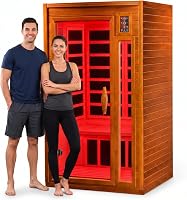
For shared sessions, the KUNSANA 2-3 Person Red Cedar Corner Sauna seats 2 to 3 adults in a five-sided corner design. It has 8 carbon panels, a dual control panel, a Bluetooth speaker and 7-color chromotherapy lights.
Cedar also brings a natural scent to the room.
None of these cabins requires special plumbing. Our guide to does a sauna need a water line covers water access for anyone planning a build.
For budget planning, see how much does an infrared sauna cost before you pick a size.
How should you care for hair after a sauna?
Rinse with cool water, condition the ends and let hair air-dry when you can. A gentle wash removes sweat and product buildup without adding more heat.
Cool water closes the cuticle and calms the scalp after sweating. Use a mild shampoo on the scalp and a conditioner on the mid-lengths and ends.
A leave-in spray adds moisture back to fine or dry strands.
Skip the blow dryer and flat iron on sauna days when possible. Let hair air-dry or use the cool setting.
If you must heat-style, apply a heat protectant first. Hot tools do far more damage than cabin air at 149°F.
Wipe down your sauna after each session so sweat and hair products do not build up on the wood or bench. A dry or slightly damp towel is enough for most cabins.
Wash your head covering regularly so oils do not transfer back to clean hair.
What mistakes dry hair out in an infrared sauna?
Long, hot sessions, wet hair left wrapped and skipped conditioner are the usual culprits. Avoiding them keeps hair comfortable without changing your routine much.
Sitting in the cabin for an hour at top heat dries strands more than a short session. Tight hairstyles and heavy products make it worse.
And wrapping wet hair in a tight towel afterward traps moisture against the scalp.
One more mistake is treating an infrared sauna as a hair treatment. The heat opens the cuticle, but it does not replace conditioner or a mask.
Plan on a wash and a moisture step after every session.
If you use a blanket sauna, keep the collar away from your face and hair. A cotton headband catches sweat at the hairline.
Keep the heat moderate and let your hair cool before styling it.
So, is infrared sauna bad for your hair?
No. For most people, an infrared sauna is not bad for your hair, and the main thing to manage is dryness.
Keep sessions short, tie hair loosely, cover it if it is fine or color-treated and wash and condition afterward. Pick a blanket sauna if you want your head fully out of the heat; pick a small cabin if you want the full room experience.
If your scalp feels irritated or your hair stays rough after several sessions, take a break and ask a dermatologist. When the session ends, our sauna heat-up guide helps you plan warm-up time so you spend less total time in dry heat.
Frequently asked questions
Should I wash my hair before or after an infrared sauna?
Rinse and dry your hair after the session, since sweat and product residue sit on the scalp when you finish. Washing before is fine if your hair is oily or coated in styling products.
A cool rinse and a light conditioner afterward is enough for most hair types.
How often can I use an infrared sauna without drying my hair?
Two or three short sessions a week suit most people who care for their hair between visits. Daily use is fine for many, but add a leave-in conditioner and cut back on hot tools on sauna days.
If strands start feeling rough, space sessions further apart.
Does infrared heat lighten or change hair color?
No. Far-infrared panels warm the body without the ultraviolet light that fades hair color.
A sauna session can make color-treated hair look dull when sweat and heat lift the cuticle, but a wash and conditioner restore the look.
Cover your hair if you want to limit that effect.
Is it safe to use a sauna with wet hair?
Yes, wet hair is not a hazard in an infrared sauna. Water on the strands simply evaporates as the cabin warms.
A loose towel or a quick blow-dry afterward keeps wet hair from sitting damp against your neck and shoulders.
What hairstyles are best for sauna sessions?
A loose braid or a soft claw clip keeps hair off your neck and reduces tangling from sweat. Avoid tight ponytails and elastics that pull on wet strands.
A silk scrunchie or a cotton headband also helps if you sweat heavily around the hairline.