How Much Does an Infrared Sauna Cost?
Most people spend a few hundred to several thousand dollars on an infrared sauna, depending on whether they buy a blanket, a one-person cabin or a larger corner model. Expect the biggest share of the cost to go to the wood, the heater panels and the size of the cabin.
On this page (9 sections)
- What does an infrared sauna cost by type?
- Why do infrared sauna prices vary so much?
- How much is a one- or two-person infrared sauna cabin?
- How much does a larger corner infrared sauna cost?
- How much does an infrared sauna blanket cost?
- What running costs come after the purchase?
- What should you budget for delivery, setup and care?
- How do you compare an infrared sauna with a traditional one?
- So how much should you plan to spend on an infrared sauna?
A portable infrared sauna blanket costs the least, a one- or two-person wood cabin sits in the middle, and a large corner cabin with premium wood and extra panels is the most expensive. The final figure depends on size, wood, heater count and extras, so the same "infrared sauna" label can cover a very wide spread.
Knowing which factors move the number helps you compare models on equal footing. Here's what drives the price of an infrared sauna and what you'll spend after the cabin is in the house.
What does an infrared sauna cost by type?
The type you choose sets the range more than any single feature. A blanket, a compact cabin and a corner cabin are three different products with three different budgets.
A blanket is the entry point. It folds up, runs on a normal outlet and covers your body rather than a room.
A one- or two-person cabin is the most common home pick, since it fits a bedroom or basement corner and gives you a seated session. A larger corner cabin with more panels and nicer wood costs more and takes up more floor space.
Within each type, the spread comes from wood, heater panels and extras. Two cabins of the same size can differ a lot once you add chromotherapy lights, a better controller or Bluetooth audio.
Why do infrared sauna prices vary so much?
Wood, heater panels and size do most of the work, and the extras explain most of the rest. A cedar cabin with eight panels costs more to build than a hemlock cabin with six.
The wood matters for durability and looks. Red cedar resists moisture and carries a scent many people like, while hemlock is lighter and often cheaper.
Panel count changes both heat coverage and draw, so a bigger cabin needs more heaters and a stronger circuit. Controls, lighting and audio add cost without changing the heat itself.
Warranty length is another quiet factor. A longer warranty on the structure and electronics usually means a sturdier build, and that shows up in the price.
Compare warranty terms when two cabins look similar on paper.
How much is a one- or two-person infrared sauna cabin?
A compact cabin is the middle of the range and the best fit for most homes. It seats one or two adults and plugs into a standard outlet on many models.
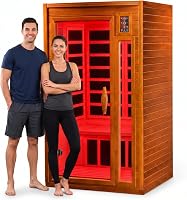
The Dynamic Saunas Barcelona shows what this tier includes. It's built from natural Canadian hemlock wood with six low-EMF carbon panels, and it fits 1-2 adults in an interior of 36 x 32 x 67 inches.
It runs up to 135°F, with a recommended comfort range of 115°F to 130°F.
It assembles in about an hour on any indoor surface, including carpet, using a standard 15-amp, 120-volt plug. Dynamic Saunas backs the structure with a 5-year limited warranty for indoor use.
That easy install keeps the total cost down, since you don't need an electrician for a dedicated line.
How much does a larger corner infrared sauna cost?
A corner cabin sits at the top of the home range, because it uses more wood, more panels and often a premium wood like cedar. It seats 2-3 adults and fits into a room corner to save space.
The KUNSANA corner model is a good example of what the extra spend buys. It's solid red cedar with eight far infrared panels and an ultra-low EMF rating of 0-1mG.
The five-sided design fits a corner and holds 2-3 adults, with a maximum temperature of 149°F.
It runs on a standard US 120-volt plug and uses tongue-and-groove construction for straightforward assembly. The dual-control LCD panel, 7-color chromotherapy lights and Bluetooth speaker are the kind of extras that push a cabin up the price ladder.
KUNSANA gives a 1-year warranty on the wooden structure and 2 years on the electronics.
How much does an infrared sauna blanket cost?
A blanket is the lowest-cost way to try infrared heat, and it's the right pick if you rent, move often or don't have floor space for a cabin. It wraps around your body and folds away after use.
The Lifepro RejuvaWrap is a full-body blanket with far infrared carbon fiber heating and nine heat levels from 95°F to 176°F. It measures 71 x 36 inches and comes with a cotton towel, detox wraps, a controller and a carry bag.
It's lightweight at 14.7 pounds and folds for storage or travel.
It has auto shut-off and an adjustable timer from 5 to 60 minutes, plus low-EMF carbon fiber heating. A blanket costs less to buy and less to run, but its working life is shorter than a wood cabin's.
That trade-off matters if you plan daily sessions for years.
What running costs come after the purchase?
Electricity is the main ongoing cost, and it depends on the wattage of your model and how often you use it. A blanket draws far less than a cabin with eight panels.
A home cabin heats up in minutes and runs for 20 to 45 minutes a session. The more panels and the higher the temperature, the more power it pulls.
Our guide to how much electricity does a sauna use breaks down wattage by type so you can estimate a monthly figure.
Water is not a factor for infrared cabins. These are dry-heat units, so there's no plumbing or drain to add to the budget.
If you're weighing a switch to steam or traditional heat, our answer to does a sauna need a water line explains when plumbing becomes part of the cost.
What should you budget for delivery, setup and care?
Delivery and setup are usually folded into the cabin price, but a big corner model may need help getting through a doorway. Measure the door and the room before you order.
Most cabins assemble in about an hour with basic tools, and many plug into a standard outlet. A larger model may need a dedicated circuit, so ask an electrician for a quote if your panel is full.
That electrical work is a real cost some buyers forget.
Care costs are small. Wipe down the benches and keep the cabin in a dry spot.
Wood cabins last longer when the room stays above 60°F and away from steady moisture. Our look at how long infrared saunas last covers the parts that wear out first.
How do you compare an infrared sauna with a traditional one?
A traditional sauna usually costs more to buy and to run, because it heats stones and a room to high temperatures. An infrared cabin heats your body directly at lower temperatures.
The build is different too. A traditional sauna needs a stove, stones and often a vented room, while an infrared cabin is a self-contained wood box with panels.
If you're pricing both, our breakdown of how much does a traditional sauna cost shows where the extra spend goes.
For most homes without a dedicated sauna room, an infrared cabin is the simpler install. It plugs in, fits a corner and doesn't need the ventilation or foundation work a traditional build can require.
That lower total is why the infrared route is popular for basements and bedrooms.
So how much should you plan to spend on an infrared sauna?
Set your budget by type first, then by size and extras. A blanket is the low-cost entry, a 1-2 person cabin is the everyday home pick, and a corner cedar cabin is the premium option.
If you want the easiest start, the Lifepro RejuvaWrap gives you full-body infrared heat with no floor space and a low running cost. For a seated daily routine in a small room, the Dynamic Saunas Barcelona plugs into a standard outlet and assembles in about an hour.
If you have a corner to fill and want room for two or three people, the KUNSANA cedar cabin is the larger step up.
Decide how often you'll use it and where it will go before you compare prices. A model that fits your space and your routine is the better value, even when its sticker is higher.
Then check the electrical draw and warranty, and you'll know the full cost of an infrared sauna before you buy.
Frequently asked questions
How much does an infrared sauna cost for a typical home?
A portable infrared blanket sits in the low hundreds of dollars. A one- or two-person cabin usually lands in the low to mid thousands, and a larger corner cabin with premium wood goes higher still.
The exact figure depends on size, wood type, heater count and extras like lighting and Bluetooth.
Is an infrared sauna cheaper to run than a traditional one?
It usually draws less power per session because the heaters warm your body directly rather than heating a room full of stones and air. A home cabin runs on a standard 120-volt outlet in many cases.
Check the wattage on the model you pick, since a bigger cabin with more panels uses more.
Do I need special wiring for a home infrared sauna?
Many one- and two-person cabins plug into a standard 15-amp, 120-volt outlet, so no special wiring is needed. Larger cabins and models with more heating panels may draw more current.
Ask an electrician to check the circuit before you buy if you plan a big corner model.
What adds to the cost of an infrared sauna over time?
Electricity is the main ongoing cost, followed by replacement parts if a heater panel or controller fails. Wood cabins need occasional cleaning and a dry spot to prevent moisture damage.
A blanket costs less to run but has a shorter working life than a wood cabin.
Can I finance or spread out the cost of an infrared sauna?
Some sellers offer installment plans at checkout, and the total is often split over several months. Compare the full amount you'll repay against paying outright.
A smaller cabin or a blanket is the lower-cost way into infrared heat if the upfront total is the hurdle.
Does a more expensive infrared sauna last longer?
Price tracks build quality to a point. A cedar cabin with more heater panels and a longer warranty usually outlasts a budget model.
Our look at how long infrared saunas last covers the parts that fail first and what to expect from each type.