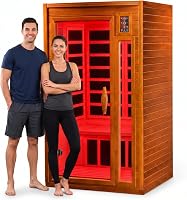
How to Get My Infrared Sauna Hotter
Let the cabin preheat for 20 to 30 minutes with the door and lid shut before you judge it. If it still runs cool, check the door seal, the room temperature around the cabin, and whether a vent or lid is leaking heat faster than the panels can add it.
On this page (11 sections)
- How long should an infrared sauna preheat before you judge it?
- Is the cabin leaking heat through the door or lid?
- How much does the room around the sauna matter?
- What settings and controls should you check first?
- Why does the cabin cool down during a session?
- When is a cooler temperature actually fine?
- How do you measure the cabin temperature accurately?
- Can you improve heat retention with simple additions?
- What should you check on the heating panels themselves?
- Is a bigger or better-insulated cabin the real answer?
- What should you do next to get your infrared sauna hotter?
To get your infrared sauna hotter, preheat it with the door and lid closed for 20 to 30 minutes, then fix whatever is leaking heat: the door seal, an open vent, a cold room, or a panel that isn't heating. Most cabins that feel cool are losing warmth faster than the panels make it.
That order matters. Check the simple causes before you assume the heater is weak.
A far infrared cabin in a 60°F basement will always struggle more than the same cabin in a 72°F room.
How long should an infrared sauna preheat before you judge it?
Give it a full 20 to 30 minutes from cold, and longer in a cool room. Far infrared panels warm the air and the surfaces slowly.
Stepping in after 10 minutes and calling the cabin cold is the most common false alarm.
A 2-3 person corner cabin holds more air and more wood than a one-person unit, so it needs the longer end of that window. Cold-start performance also depends on the room: a basement or garage in winter adds several minutes.
Use a timer and keep the door shut the whole time. Open the door only to step in.
If the cabin reads its set temperature after 30 minutes and still feels weak, move on to the leak checks below.
Is the cabin leaking heat through the door or lid?
A poor seal is the top reason a warmed cabin cools down. Gaps around the door let room air in and heat out faster than the panels can replace it.
Run your hand around the closed door while the sauna heats. A steady draft or a warm spot outside the frame points to a bad gasket.
Check the lid or roof panel the same way.
Simple fixes cost nothing: clear crumbs and debris from the gasket, straighten a folded seal, and confirm the door latches snugly. A warped or torn gasket needs replacing.
On a corner cabin, also check the two wall-side panels. Pushing the unit tight against a wall can pinch the frame and hold the door slightly open.
How much does the room around the sauna matter?
A lot. Infrared panels raise the cabin's air temperature above the room's starting point, so a cold room caps how hot the sauna can get.
Aim to keep the surrounding space at normal indoor comfort.
Close nearby windows and doors, and keep the cabin away from air conditioning vents or a cold draft. In an unfinished basement, a small space heater in the room helps more than most people expect.
Don't block the panels' path to the room either. Leaving clearance around the outside of the cabin lets the wood and frame release heat evenly.
For a fuller look at where and how to site a unit, see does a sauna need a water line. Placement and utilities decisions made early are hard to undo later.
What settings and controls should you check first?
Confirm the set temperature is actually at its maximum and the timer is long enough. A cabin left on a lower preset will happily sit cool and never tell you why.
Open the control panel and raise the set point to the highest value it allows. Set the session timer longer than your planned time so the heater doesn't shut off mid-warm-up.
If the display shows a lower reading than you set, the panels may still be climbing. Give it another cycle before you touch anything else.
Some cabins have separate controls for the main heater and any foot or back panels. Make sure all of them are on.
On a dual-panel model, one zone left off halves the heat.
Why does the cabin cool down during a session?
The panels cycle on and off to hold the set temperature, so a dip mid-session is normal. A big drop usually means heat loss won, not that the heater failed.
Check three things in order: the door is fully closed, no vent or window is open, and nothing is draped over a panel. Towels and robes hung inside can block a heater's face.
Long sessions also cool the cabin as your body and wet towels pull heat from the air. Take shorter sessions in a cooler cabin rather than fighting it.
If the temperature falls steadily while the display says "heating," the room around the sauna is the likely culprit. Go back to the placement and sealing checks.
When is a cooler temperature actually fine?
Far infrared works at lower air temperatures than a traditional hot room, so a reading in the 120s to 140s F can still deliver a real session. Don't chase a number you saw in someone else's cabin.
The panels warm your body directly as well as the air. What matters is how warm you feel and how long you can comfortably stay in.
Many people prefer a moderate cabin for a longer session over a very hot one for a few minutes.
If you feel too cool, add clothing or a towel rather than cranking the set point. A light layer traps the infrared warmth close to your skin.
Treat the cabin as a personal comfort zone. A "cool" sauna that feels good after 20 minutes is working as intended.
Our look at how long do infrared saunas last covers the other side of ownership: how the panels hold up over years.
How do you measure the cabin temperature accurately?
Use a dedicated sauna thermometer placed at seated height, away from a panel face. A wall thermostat or a phone app reads the air near the heater, not the air around you.
An analog wood-and-metal gauge is simple and needs no batteries. Hang it at chest height when you're seated and let it settle for a few minutes before reading it.
Place it away from the door and away from direct panel heat. A gauge next to the heater will always run hot and send you chasing a problem that isn't there.
For more on gauges and where they belong, our guide to sauna thermometers and hygrometers covers placement and care.
Can you improve heat retention with simple additions?
Yes, within limits. A well-sealed cabin holds its heat better, and small additions help the room around it stay warmer.
None of them raise the panels' output.
If your cabin sits against a cold exterior wall, an insulation layer on the outside face reduces heat loss. That's a construction step, so plan it before assembly rather than after.
Radiant foil reflects heat back and blocks drafts at the wall. It's a build-time material, so use it when the cabin is sited or moved, not as a quick fix on a finished unit.
Never line the inside of the cabin or cover a panel with foil or any other material. That traps heat in the heater and creates a real safety risk.
What should you check on the heating panels themselves?
Look for a panel that stays cold while the others heat. In a multi-panel cabin, one dead or weak panel pulls the whole cabin's temperature down.
After a 15-minute cycle, touch each panel face briefly with the back of your hand. They should all feel warm.
A cold panel with the unit running points to a wiring or element fault.
Check that each panel is switched on at the control and that no cable is loose at the connection. Don't open the electrical housing yourself.
A dead panel is a warranty or repair matter.
If all panels are warm and the cabin still runs cool, the problem is almost always the room, the seal or the settings. Work back through those before calling support.
Is a bigger or better-insulated cabin the real answer?
Sometimes. If you've sealed the door, warmed the room and confirmed every panel heats, and the cabin still runs below your comfort zone, the unit's design may be the ceiling.
A cabin with more panels and tighter construction will run hotter than a basic model in the same room. So will a unit sized to the room rather than oversized for it.
The KUNSANA corner model lists eight heating panels and a maximum of 149°F, with dual controls and a ventilation system. That's a realistic ceiling to plan around, not a guarantee for every room.
Before buying a replacement, work through the checks in this guide on your current unit. Many "cool" saunas turn out to be a cold room or an open vent away from a fix.
What should you do next to get your infrared sauna hotter?
Preheat longer, shut the door and vents, warm the room, and confirm every panel is on. Those four steps fix most cabins that feel cool.
Only then look at the heater or the cabin itself.
Work in order. Start with a full 30-minute preheat and a closed door.
Warm the room, check the settings and feel each panel. If the cabin still runs cool, contact the maker about the panels or controls.
And keep your expectations tied to the unit's rated maximum. A far infrared sauna is meant to feel warm and gentle, not like a traditional hot room.
Our guide to how much electricity does a sauna use helps you plan the warm-up cycles without a surprise on the bill, and how much does an infrared sauna cost covers what a hotter-running upgrade would set you back.
Frequently asked questions
How long should an infrared sauna take to reach its top temperature?
Plan on 20 to 30 minutes from a cold start in a typical room. Small cabins warm faster, while a large cabin in a cool basement needs the longer end and possibly a second cycle.
Does opening the door really drop the temperature that much?
Yes. Each door opening dumps the warmed air and the panels have to rebuild it.
Keep the door shut during warm-up and step in and out quickly once the session starts.
Can I raise the temperature by covering the heating panels?
No. Panels need open air to shed heat into the cabin.
Draping a towel or blanket over a panel traps heat inside it and can damage the unit, so leave every panel face clear.
Is a cooler infrared sauna still doing anything useful?
Yes. Far infrared works at lower air temperatures than a traditional hot room, so a cabin sitting in the 120s to 140s F still delivers heat.
Judge the session by how you feel and how long you stay in, not only by the dial.
Why does my sauna feel hot at first and then cool down?
The panels cycle on and off to hold the set temperature. If the cabin cools mid-session, the room around it is pulling heat away or a vent is open.
Close vents, check the door, and give the heater time to catch up.
When should I stop troubleshooting and call support?
If the cabin never gets warm after a full preheat, or one panel stays cold while others heat, stop and contact the maker. A dead panel or control fault is a repair job, not a settings problem.