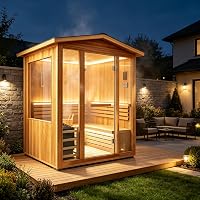
Do Indoor Saunas Need to Be Vented?
Yes, an indoor sauna needs venting. A low inlet near the heater and a higher outlet on the opposite wall keep fresh air moving, carry moisture out and stop the cabin feeling stale or steamy.
On this page (10 sections)
- How does an indoor sauna vent?
- Why do indoor saunas need airflow at all?
- Where should the inlet and outlet vents go?
- How big should sauna vents be?
- How do electric and wood burning saunas vent differently?
- What else affects airflow in an indoor cabin?
- How should you run the vents during and after a session?
- How does venting change how much water you can use?
- What mistakes cause poor airflow?
- Which supplies help you manage sauna airflow?
Yes, an indoor sauna needs venting. A low inlet near the heater and a higher outlet on the opposite wall keep fresh air moving, carry moisture out and stop the cabin feeling stale or steamy.
Without that airflow, even a well-built room gets stuffy and the wood stays damp longer.
The good news is that the venting is simple. Most home cabins use two small openings rather than a full duct system.
This guide covers where the vents go, how big they should be and how to run them.
How does an indoor sauna vent?
An indoor sauna vents through a low inlet and a higher outlet. Fresh air enters near the heater, warms as it crosses the room and leaves through the outlet, carrying moisture with it.
That loop is what keeps the air breathable and the benches dry.
The inlet usually sits low, close to the heater, so incoming air heats quickly and doesn't create a cold draft at your feet. The outlet sits higher on the opposite wall, because warm, moist air rises.
Placing the two openings apart forces air to travel across the cabin instead of short-circuiting straight up.
This is passive venting. It relies on the heat from the heater to drive the air, so there are no fans or motors to run.
The one thing to remember is that both vents must connect to air that can actually move, not a sealed wall cavity.
Why do indoor saunas need airflow at all?
Airflow does three jobs: it supplies oxygen, moves moisture out and keeps the heat even. A sauna is a small, hot, sealed box, and all three matter every time you sit in it.
First, people breathe. A sealed cabin with a couple of people inside loses oxygen and gains carbon dioxide over a session.
Second, a sauna session adds a lot of water vapor to the air, and without somewhere for it to go, the humidity climbs until the heat feels heavy rather than dry. Third, still air creates hot and cool pockets, so your head cooks while your feet stay cool.
Good venting also protects the cabin itself. Moisture that can't escape settles into the wood and the insulation, and over time that leads to swelling and mildew.
Where should the inlet and outlet vents go?
Put the inlet low near the heater and the outlet high on the opposite wall. That arrangement heats incoming air fast and lets moist air leave from the top of the cabin.
Keep both openings away from where people sit so no one gets a draft.
The inlet should sit somewhere between bench height and the floor, close enough to the heater that cold air warms as it comes in. Many cabin builders place it behind or beside the stove.
A wood stove also needs a low vent nearby for combustion air, separate from the general room vent.
The outlet belongs near the ceiling on the far side. Warm, damp air gathers up there, so the top corner is where it should leave.
Avoid putting both vents on the same wall, or the air will just loop back on itself.
How big should sauna vents be?
Small vents are enough: roughly 4 by 6 inches for each opening in most home cabins. You aren't trying to air-condition the room, just keep a steady exchange of air.
Oversized vents make the cabin slow to heat and hard to keep at temperature.
Some people fit adjustable covers so they can close the vent down while the cabin warms and open it during use. That control matters more than a large opening.
If you use a wood-burning heater, add a fresh air vent near the stove for combustion. That vent is separate from the general airflow and should feed the stove directly, often from outside.
Follow the heater maker's instructions for the size and placement of that vent, since they take priority over any general rule.
How do electric and wood burning saunas vent differently?
A wood-burning sauna needs a chimney flue for smoke, while an electric sauna needs only inlet and outlet vents. Wood stoves also need combustion air, so they get one more opening than an electric cabin.
With wood, the stove draws air for the fire and sends smoke up a chimney through the roof or wall. You need that flue plus a low vent to supply the fire with fresh air.
Without enough combustion air the stove burns poorly and smokes into the room.
An electric heater has no fire and no smoke. It only needs the inlet and outlet that keep the cabin breathing.
That makes an electric cabin simpler to vent, since there's no chimney to plan for and no combustion air to route.
What else affects airflow in an indoor cabin?
The heater, the room around the cabin and the way you use water all change how much venting you need. A powerful heater heats a small cabin quickly, so a slightly larger inlet helps keep up.
The room outside the cabin matters too: a sauna in a sealed basement closet has less air to draw on than one in an open living space.
Give the surrounding room a way to breathe as well.
Your water habits play a part. Ladling water on the stones raises humidity fast, and that moisture needs an outlet.
A hygrometer helps you see when the air is getting heavy so you can open the vent.
This combined thermometer and hygrometer reads temperature in Fahrenheit on the outer ring and Celsius inside, and the humidity dial shows relative humidity. Northwood Sauna hand-makes it from red cedar and says the gauges are calibrated during assembly.
Hang it away from the heater so it reads the room rather than the stove.
The Harvia sensor pairs with the MyHarvia app and reports temperature, humidity and usage. It works with both electric and wood heaters, so it suits either kind of cabin.
It senses from about 1 meter away and reads up to 130 °C. The app alerts you 10 minutes before the sauna reaches temperature and flags unusual heating patterns.
The bucket holds 1 gallon and the ladle 100 mL, which is a sensible amount for most heaters to turn into steam. Northwood Sauna makes the set from red cedar with a natural rope handle and a removable recycled plastic liner.
Measured pours keep humidity predictable and easier to vent.
How should you run the vents during and after a session?
Open the inlet and outlet while the cabin heats and during the session, then open both fully afterward to dry the wood. During warm-up, some people close the vents to reach temperature faster.
That's fine for a short time, but open at least the inlet before you get in.
During the session, keep a modest cross-flow so the air stays fresh without cooling the room too much. Open the outlet wider when you add water to the stones and the air feels heavy.
After the session, open both vents all the way and leave the door ajar. The cabin needs to dry fully before the next use.
A wet cabin left closed develops a musty smell and stresses the wood. For a comfort check, see what temperature should a sauna be so you can balance heat against airflow.
How does venting change how much water you can use?
Better venting lets you use more water without the cabin getting clammy. With a working outlet, humidity leaves as steam rather than hanging in the room.
Steam rises and exits near the ceiling, so the air stays manageable.
If your session feels wet rather than hot, check the outlet before cutting back on water.
This is also where a hygrometer earns its place. Watching the humidity number tells you when to open the vent or pause on the water.
For more on moisture in the cabin, read does a sauna need a water line to plan your water supply.
What mistakes cause poor airflow?
The common mistakes are sealing the cabin tight, putting both vents on one wall and blocking the outlet with benches. Fixing them is usually cheap and quick.
- Sealing every gap in the cabin walls and door. Some airflow is needed, so leave the vents working.
- Placing inlet and outlet on the same wall so air short-circuits.
- Blocking the outlet with a high bench or a shelf.
- Closing both vents after the session and trapping moisture.
- Forgetting the separate combustion air vent on a wood stove.
Which supplies help you manage sauna airflow?
The answer starts with a low inlet and a high outlet, plus a way to read the air inside. The Northwood hygrometer is the first thing to hang, because it shows when the air is getting heavy.
The Harvia sensor adds real-time tracking through an app if you want alerts and history.
The cedar bucket and ladle keep your water additions measured so humidity stays predictable.
Set the vents before your first session, then adjust them as you learn how your cabin heats. If the air still feels stale, the inlet is likely too small or blocked.
For bench and layout planning that leaves the outlet clear, see how wide should sauna benches be. And if you're deciding where the cabin will live, can I put an indoor sauna outside covers the room and weather questions.
Frequently asked questions
Do indoor saunas need to be vented?
Yes. A small inlet low near the heater and an outlet higher on the opposite wall give the cabin a steady supply of fresh air.
This keeps oxygen levels comfortable, carries humidity out and stops the room from feeling stuffy during long sessions.
Can you vent an indoor sauna into the same room?
Yes, most indoor cabins vent into the room they sit in rather than outdoors. The room needs its own air supply and some general ventilation, so don't seal the cabin into a closed closet without a way for air to move.
Can you close the vents during a session?
You can partly close them to build heat faster, then open them once the cabin is warm. Leave at least some airflow during use, and open the vents fully after the session to dry the wood.