Indoor vs Outdoor Saunas: Key Differences
The difference between an indoor and an outdoor sauna is mostly placement and ownership. An indoor sauna uses your existing room and power supply, while an outdoor sauna needs its own pad, weather protection and often a bigger electrical run.
On this page (9 sections)
- What is the main difference between an indoor and outdoor sauna?
- Which sauna type fits your space and budget?
- How does each type handle power and wiring?
- How do indoor and outdoor saunas differ in heat and comfort?
- What does ownership look like for each type?
- Can you put an indoor sauna outside?
- Does a sauna need plumbing?
- How much maintenance and cost should you expect?
- Which type should you choose?
The difference between an indoor and outdoor sauna is mostly placement and ownership. An indoor sauna uses your existing room and power supply, while an outdoor sauna needs its own pad, weather protection and often a bigger electrical run.
That single split drives everything else: the heater you can fit, the wiring you need, how fast the cabin heats, and how much upkeep the wood demands. This guide walks through each trade-off so you can pick the type that fits your home.
What is the main difference between an indoor and outdoor sauna?
The main difference is where the cabin sits and what it must survive. An indoor sauna lives in a dry, temperature-controlled room.
An outdoor sauna faces rain, snow, sun and wind on top of its own heat.
Indoor units are usually smaller and built to slide into a corner, garage or spare room. Outdoor cabins are often barrel-shaped or cabin-style and stand on a pad or deck in the yard.
Placement also changes the ownership load. An indoor cabin asks for ventilation and a power run.
An outdoor one adds a foundation, a roof or tarp, and seasonal wood care.
The construction follows the location. Indoor panels are built for a stable room climate, so the wood stays at an even moisture level.
Outdoor cabins use timber chosen to shrug off wet and cold, like the Norway spruce on the Kanlanth model, which is picked for low shrinkage and a surface that stays cool to the touch.
Neither type is automatically better. The right pick depends on the space you have and how much setup work you want to take on.
Which sauna type fits your space and budget?
Choose indoor if you have a spare room, garage or basement corner; choose outdoor if you have yard space and want the cabin out of the house. Space is the first filter, and it usually settles the question before price does.
A two-person indoor steam sauna like the HOSAUNA unit measures 47.2 x 47.2 x 74.8 inches. That footprint fits a corner or a small utility room, and the snap-lock panels let two adults assemble it without pro tools.
Inside, the bench is 43.3 inches wide and rated to hold up to 265 lbs, so two adults can sit side by side without crowding.
Outdoor cabins need that footprint plus clearance. The Kanlanth outdoor model runs 81.1 x 44.88 x 83.46 inches overall, so plan for the door swing, roof overhang and a level pad.
Its interior is sized for two people at 58 in × 41 in × 81 in, with a seat load capacity of 660 pounds.
Budget works differently too. Indoor units save on site prep but may need a dedicated circuit.
Outdoor cabins often cost more once you add the pad and weatherproofing.
How does each type handle power and wiring?
Power is the biggest hidden difference. Indoor saunas often plug into an existing 120V or 220–240V circuit, while outdoor units usually need a dedicated run to the yard.
Check the heater rating before you buy either type.
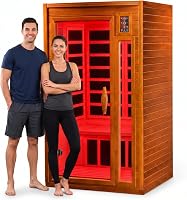
The HOSAUNA 2 Person Traditional Steam Sauna runs a 3000W stove on AC 220–240V. That means a dedicated 240V circuit in most homes, installed by an electrician.
The Kanlanth outdoor infrared sauna runs 1850W on 120V and 15A with a standard US plug and a 10-foot power cord. That is a friendlier draw, though an outdoor outlet still needs weather protection.
It also packs overheat protection at 110°C into the same circuit.
A traditional barrel sauna with a 9kW heater, like the ToTibuy model, needs a serious 240V supply. Running that to a backyard usually means trenching conduit.
Wattage also drives running cost. Our guide to how much electricity a sauna uses breaks down session costs by heater size.
How do indoor and outdoor saunas differ in heat and comfort?
Heat depends on the heater, not the address. A traditional stove with volcanic stones produces a hot, steamy room, while far-infrared panels warm the body more gently.
The HOSAUNA steam sauna reaches up to 195°F (90°C) and lets you pour water on the stones for a steam burst. That is the classic Finnish feel, and its all-season kit includes a bucket, scoop and hygrothermograph so you can watch the humidity climb.
The Kanlanth outdoor far-infrared model caps at 158°F (70°C) and heats with six infrared plates. It suits people who want a milder, dry session.
Outdoor cabins lose some heat to wind and cold, so insulation matters. A carbonized spruce barrel with an 8mm tempered glass door and a heat-locking roof tarp holds warmth better than a thin panel cabin.
The ToTibuy heater is rated to reach temperature 50% faster than standard 6kW units.
Before you buy any heater, read what temperature a sauna should be so you know what your target range really feels like.
What does ownership look like for each type?
Ownership splits into indoor convenience versus outdoor weather care. Indoor units need ventilation and a moisture check on the room.
Outdoor cabins need seasonal wood and roof upkeep.
Indoor sauna ownership
An indoor sauna stays dry and out of the sun, so the wood sees less weather stress. You still need a vent to clear steam and a floor that can handle damp air.
The HOSAUNA unit arrives as a kit with a bucket, scoop, hygrothermograph and stones. Assembly is tool-free, and the brand backs it with a 7-year warranty.
Skip it if you cannot add a 220–240V circuit or if the room has no way to vent moist air. Check the ceiling height against the 74.8-inch frame too.
Outdoor sauna ownership
An outdoor cabin asks for a level pad and a weatherproof roof. Wood needs periodic care, and the door seal should be checked as seasons change.
The ToTibuy barrel sauna uses carbonized spruce with an 8mm tempered glass door and a waterproof roof tarp. The brand includes stones, a bucket, a thermometer and LED lighting.
The carbonized spruce is controlled to 8%–15% moisture and treated to resist cracking.
Skip it if you have no flat yard space or cannot run a 240V line outside. The barrel footprint of about 80 x 80 inches needs room to walk around.
Can you put an indoor sauna outside?
No, not as a permanent outdoor cabin. Indoor units are built for a sheltered room, so rain, frost and UV will wear the panels and seals fast.
You can read more about the limits in can I put an indoor sauna outside.
If you want an outdoor sauna, buy one rated for it. The Kanlanth cabin handles an outdoor temperature range from -10°F to 158°F.
This outdoor model fits two people and adds an LCD panel, Bluetooth speaker and chromotherapy light. It avoids the 240V run a steam stove needs.
Its app integration also lets you preheat the cabin before you walk out to the yard.
Skip it if you want a hot steam room rather than infrared warmth. Pick a stove cabin instead.
Does a sauna need plumbing?
Most saunas do not need a water line. A traditional stove needs water only for the steam burst, and you carry that in with the included bucket.
Infrared cabins need no water at all.
So plumbing rarely decides indoor versus outdoor. For the full picture on drains, buckets and fill points, see does a sauna need a water line.
What matters more is drainage around the cabin. An outdoor unit should sit on a pad that sheds rain, and an indoor one needs a floor that tolerates damp towels.
How much maintenance and cost should you expect?
Indoor saunas are lower on weather maintenance; outdoor cabins are higher on wood care. Both types share the same heater upkeep.
Indoor: wipe the benches, vent moisture and keep the room dry. The wood avoids rain and frost, so refinishing is rare.
Outdoor: check the roof or tarp, clear snow load and treat the exterior wood now and then. The ToTibuy roof tarp and tempered glass door help reduce weather exposure.
Running cost tracks heater wattage and session time, not location. A 3000W steam stove uses more power per hour than a 1850W infrared cabin.
The gap narrows when an outdoor cabin is well insulated. A barrel with thick carbonized spruce holds heat better than a thin outdoor panel unit.
Which type should you choose?
The difference between indoor and outdoor sauna ownership comes down to your space and how much weather care you accept. Pick an indoor steam cabin if you have a room and can add a 240V circuit.
Pick an outdoor model if your yard has a flat pad and you want the cabin out of the house.
Go indoor for the classic hot steam session: the HOSAUNA 2 Person Traditional Steam Sauna with 3KW Heater gives you 195°F heat and a full accessory kit. Go outdoor for easy power and weather-rated build: the Kanlanth far-infrared cabin runs on 120V and handles cold and heat.
For a yard centerpiece with real steam, the ToTibuy carbonized spruce barrel holds heat well and comes with stones and lights.
Check your power supply and pad space first. Those two facts decide the type faster than any feature list.
Frequently asked questions
Is an outdoor sauna hotter than an indoor one?
Not by design. Heat comes from the heater type, not the location.
A traditional stove with stones can reach 195°F and up, while many infrared cabins cap near 158°F.
Outdoor placement mainly adds weather and insulation demands, not extra heat.
Can I put a sauna in a garage or shed?
Often yes, if the building has the right power supply, ventilation and headroom. Treat it like an indoor install for wiring and moisture, and like an outdoor one for damp and cold.
Check local rules before adding a dedicated circuit.
Do outdoor saunas cost more to run?
They can, because wind and cold pull heat through the walls. A well-insulated barrel or cabin narrows the gap.
Running cost still follows heater wattage and session length more than location, so compare heaters before you decide.
How much space does each type need?
A two-person indoor cabin often fits in a corner at roughly 47 x 47 inches. An outdoor cabin needs that footprint plus clearance for the door, roof overhang and any steps.
Measure the path to the site before ordering.