Can You Put an Infrared Sauna Outside?
Yes, you can put an infrared sauna outside, but only if the cabin is built for outdoor weather. An indoor-model cabin moved to a patio will swell, warp and leak, so the roof, timber and door seal matter more than the heater.
On this page (9 sections)
- What makes a cabin suitable for outdoor use?
- Why does an indoor cabin fail outdoors?
- How should you site an infrared sauna outside?
- What roof and door details keep rain out?
- How cold can you run an infrared sauna outside?
- What power and controls does an outdoor infrared sauna need?
- Do you need a different heater for an outdoor cabin?
- Who should buy an outdoor-ready infrared sauna?
- So, can you put an infrared sauna outside?
Yes, you can put an infrared sauna outside, and plenty of backyards make a better home for one than a spare room does. The catch is that the cabin has to be built for the weather, not just moved outdoors after years of indoor living.
An outdoor-rated infrared cabin keeps the heat in, sheds rain and survives frost.
What makes a cabin suitable for outdoor use?
A cabin is suitable for outdoors when its roof, wall thickness, timber and door seal are designed for rain and temperature swings. Look for a pitched roof, a waterproof layer, sealed joints and a door that closes tight against a gasket.
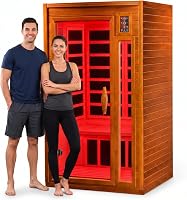
The 2 Person Outdoor Far Infrared Sauna from Kanlanth shows what those details look like together. It uses slow-growth Norway spruce with a pale finish and is rated for outside temperatures from -10°F to 158°F.
That range is the number that matters if you get cold winters.
Timber choice is the second check. Norway spruce is light, insulates well and has low shrinkage, so panels resist splitting and warping when the seasons change.
The cabin walls stay cool to the touch from the outside, which matters when kids or pets walk past.
A flat lid with no overhang is the warning sign. That is an indoor cabin with a coat of stain, and it will leak at the seams within a season or two.
Why does an indoor cabin fail outdoors?
An indoor cabin fails outside because it was never built to shed water or handle freezing. Rain finds the panel joints, the timber swells, and the heater and wiring sit in damp air they were not designed for.
Two problems tend to appear first. The floor and lower panels soak up splash from the ground, and the door seal lets in wind that drops the cabin temperature between sessions.
Both speed up the wear that decides how long do infrared saunas last.
The heater itself is usually fine with cold air. The struggle is holding heat in once the seal and panels give up, so warm-up times stretch from minutes to a long wait.
This is also why you should not take an indoor cabin and place it on a deck. The honest answer to can I put an indoor sauna outside is that it will work for a while and then fail early.
Buy an outdoor-rated cabin from the start and the money goes further.
How should you site an infrared sauna outside?
Site the cabin on level, solid ground with drainage and some shelter from wind. A paved patio, concrete pad or compacted gravel base works better than bare lawn, which shifts when it rains.
Leave space for the roof to shed water away from the door. Keep the back against a fence or wall if your area allows it, but not tight enough to trap moisture behind the panels.
Think about the walk from the house. An outdoor sauna you reach through a cold yard in winter is one you use less, so place it near a door or a covered path.
Sun is the other factor. Strong afternoon sun heats the exterior and makes the cabin work harder, while shade from a tree or an awning keeps it cooler.
Can you put a sauna in a garage or under a carport instead?
Yes. A garage or covered patio solves most of the weather problem while keeping the sauna close to the house.
Our guide to can you put a sauna in a garage covers ventilation and clearance for that setup.
A covered spot still needs airflow. Leave the vents clear and don't box the cabin into a damp corner with no air movement.
What roof and door details keep rain out?
A rain-proof cabin needs a pitched roof with a waterproof layer, an overlapping ridge cover and a door that seals against a gasket. Those three details decide whether water runs off or soaks in.
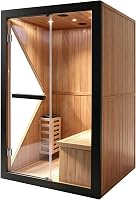
The Albott 1 Person Outdoor Sauna shows the full package. It comes with an asphalt shingle roof, ridge cover shingles and an integrated waterproof layer, and Albott says the reinforced joints resist moisture and mold.
The door matters just as much. Albott uses tempered glass in a sealed door, so wind and rain stay outside and the heat stays in.
A loose door lets cold air wash over the panels every time you open and close it.
Check that the roof overhangs the walls. An overhang keeps drips off the timber below and stops water from tracking back into the panel seams.
How cold can you run an infrared sauna outside?
You can run an outdoor infrared sauna down to the lowest outside temperature the cabin is rated for, then add preheat time in the cold. The heater works harder in winter, so it needs longer to bring the room to temperature.
The Kanlanth 2 person cabin is rated from -10°F to 158°F, and its heater tops out at 158°F inside. That is a normal infrared range, comfortable for a long session rather than a punishing one.
Albott makes the winter point directly: its cabin reaches up to 149°F, and cold weather slows heat transfer, so the sauna needs extra preheating time before use. Plan for it in January and it stops being a surprise.
Below the cabin's rating, don't run it. The heater will strain, and the timber and seals take more stress than they were built for.
What power and controls does an outdoor infrared sauna need?
An outdoor infrared sauna needs a weather-safe outlet within reach of the cord and a circuit that can carry the load. Run the cord so it doesn't sit in puddles or cross a walkway.
The Kanlanth cabin runs on 120V at 15 amps with 1850 watts and a 10 ft cord. It has an LCD panel, touch controls and app control, so you can preheat it from inside the house before you walk out.
Smart control is a real convenience outdoors. The Albott model pairs an LCD panel with dual Bluetooth speakers and a reading light, which turns a cold-weather session into something closer to a routine.
Always plug into a GFCI-protected outlet outdoors. Follow the cabin's electrical instructions, and have an electrician check the circuit if you are unsure.
Do you need a different heater for an outdoor cabin?
The heater that comes with an outdoor cabin is normally enough, because the cabin's insulation does the work. A wood-burning stove is a different choice entirely, and it suits tent and barrel saunas more than a sealed infrared cabin.
The High-Output Wood Burning Sauna Stove Kit is the option for a tent or open sauna build. It includes the stove, a rock basket, heat-resistant gloves and a fire poker, and it heats fast on wood fuel.
It is not a swap-in part for an infrared cabin.
If your outdoor plan includes a tent sauna rather than a cabin, that kit covers the fire, steam and safety gear in one purchase.
Who should buy an outdoor-ready infrared sauna?
Buy one if you have the space outside and want to keep your indoor rooms free. The 2 Person Outdoor Far Infrared Sauna fits two people in an internal space of 43.9 x 33.66 x 70.08 in and saves you giving up a spare room.
Pick the Albott 1 Person Outdoor Sauna if you want a smaller footprint and a roof built for rain. Its asphalt shingle roof and sealed tempered glass door suit a patio spot with no extra cover.
If you plan a tent or barrel sauna instead, the wood stove kit is the right starting point for heat.
So, can you put an infrared sauna outside?
Yes, putting an infrared sauna outside comes down to buying a cabin rated for the weather and siting it on solid, drained ground. Roof, timber, seal and power are the four checks, and once they pass, the backyard becomes the best room for it.
Skip the idea of moving an indoor cabin onto a patio; it will fail early and cost more than the right one. If you want room to stretch, our guide to the 3 person infrared sauna covers bigger cabins with the same outdoor build.
Buy for the weather first and the heater second, and the sauna will earn its place outside for years.
Frequently asked questions
What temperature range suits an outdoor infrared sauna?
Pick a cabin rated for the coldest weather you get. The Kanlanth 2 person model is rated from -10°F to 158°F outside.
Below its rating the heater works harder and takes longer to reach 158°F inside.
Does an outdoor infrared sauna need a special power supply?
It needs a 110V or 120V outlet close enough for the cord, and a dedicated circuit is wise. The Kanlanth 2 person uses 1850 watts at 15 amps on a 120V plug.
Check the cord length and outlet position before you build the spot.
Can I put an indoor sauna outside?
You can, but it will not last long in the weather. Indoor cabins are built for dry rooms, so rain, sun and frost lift panels and split timber.
Buy a cabin designed and rated for outdoor use instead.